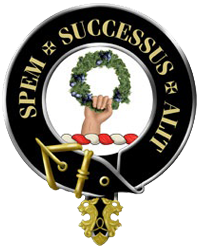
Fearchar mac in tSagairt
Son of the Priest, First Earl of Ross
c. 1170 – February 1251
Founder of the Earldom of Ross
Applecross, Ross-shire, Scotland
A Historical Biography
September 2026
In the annals of medieval Scotland, few figures loom as large — or remain as enigmatic — as Fearchar mac in tSagairt, the man whose decisive actions in the summer of 1215 set the stage for one of the most storied earldoms in Scottish history. Known in anglicized form as Farquhar MacTaggart, his Gaelic name translates simply and evocatively as "Son of the Priest" — a lineage rooted not in temporal lordship but in the sacred authority of a hereditary ecclesiastical family that had governed the remote peninsula of Applecross for generations.
[1]
This biography traces the life of Fearchar from his origins in the ancient Ó Beólláin (O'Beolan) family of Applecross, through his pivotal military intervention on behalf of the teenage King Alexander II of Scotland in 1215, to his elevation as first Earl of Ross and his decades of loyal royal service. It examines the political, cultural, and ecclesiastical world in which he moved — a world defined by the collision of Norse-Gaelic maritime culture, the expanding ambitions of the Scottish crown, and the complex loyalties of the northern Highland clans.
[2]
Fearchar's story is more than the biography of a single warrior-lord. It is the founding narrative of the Earldom of Ross, and through it run the genealogical threads of Clan Ross, Clan Matheson
[6], the original MacKenzie Chiefs
[7], and the family surname Gillanders — each descended from or connected to the O'Beolan inheritance that Fearchar carried into the thirteenth century and transformed into a recognized feudal earldom under the Scottish crown.
The O'Beolan family — rendered in Gaelic as Ó Beólláin — were the hereditary abbots, or co-arbs, of the monastery of St. Maelrubha at Applecross, a hauntingly remote peninsula on the western coast of Ross-shire facing the Isle of Skye. Despite the name's pastoral resonance, Applecross contains no apple trees; the name derives instead from the Pictish Gaelic "A' Chomraich," meaning sanctuary.
[1]
The abbey itself was dedicated to Saint Andrew, and over time the O'Beolans adopted the Gaelic designation "Mac Giolla Aindreis" — meaning "son of the servant of St. Andrew." This name has been anglicized through the centuries into the surname "Gillanders," still borne by descendants today. To be a hereditary abbot in medieval Gaelic society was not merely a ceremonial honor: the family held full temporal and spiritual authority over the monastery's estates, collected tithes, dispensed justice, and was expected to serve as the military defender of the community and its lands.
Fearchar was born into this family around 1170, the son of a man known only as "An Sagart O'Beolan" — the Priest O'Beolan. Scholars have debated the precise nature of his priestly descent. The traditional interpretation holds that he came from the hereditary abbot family of St. Maelrubha at Applecross. The historian Alexander Grant has recently proposed an alternative: that the epithet "mac an t-sagairt" (son of the priest) may instead refer to a background as keeper of the shrine to St. Duthac at Tain, in Easter Ross.
[1] Both theories acknowledge the same essential truth — that Fearchar's family occupied a position of sacred and secular authority in the pre-feudal Gaelic world of northern Scotland. Modern genetic evidence supports his origination from the Applecross region.
It is important to note that Fearchar was not the first individual to bear the title associated with Ross. Malcolm MacHeth and Floris III of Holland had previously been designated Earls of Ross, but their tenures were short-lived and marked by rebellion and instability. It was Fearchar who would transform the earldom into a lasting institution.
The world into which Fearchar was born was shaped by centuries of Norse-Gaelic cultural fusion. The Western Isles and the rugged coastline of northwestern Scotland had long been dominated by a seafaring culture that blended Gaelic language and clan structure with Norse navigational mastery and political organization. This region fell outside the effective control of either the Kings of Alba (Scotland) or the Kingdom of Norway — it was a liminal zone, governed by its own laws, alliances, and traditions.
[3]Both Clan Matheson and the early MacKenzie Chiefs descended from the same O'Beolan family as Fearchar, illustrating how the ecclesiastical authority of Applecross extended its influence across the kinship networks that defined Highland political life. These connections would prove crucial as Fearchar sought to build alliances across the northern seaways.
The personal name "Fearchar" (sometimes rendered Ferchar or Farquhar in English) derives from the Old Irish "fer" (man) combined with "cara" (beloved, dear), yielding the meaning "most dear man" or "very dear one." To this given name his contemporaries appended the patronymic "mac in tSagairt" (son of the priest), giving a full name that simultaneously honored his personal qualities and proclaimed his sacred lineage. In later Scots records, the name was anglicized to "Farquhar MacTaggart" — a rendering that survives in numerous genealogical sources and which became the common identification used in royal charters.
[1]
The year 1215 found Scotland in a precarious condition. Alexander II, at perhaps sixteen or seventeen years of age, had only recently inherited the throne of Alba, and the vast territories of the north — Ross, Caithness, Sutherland, and Moray — were restive. Old rivalries and Norse-Gaelic ambitions combined to produce an open rebellion led by Donald Bán MacWilliam and Kenneth MacHeth, who drew upon a diverse coalition that included a claimant of Irish royal blood.
[4]
The Chronicle of Melrose, one of the most important contemporary sources for this period, records the event with stark economy: "The lord king of Scotland's enemies entered Moray — namely Donald Bán, the son of MacWilliam; and Kenneth MacHeth; and the son of a certain king of Ireland, with a numerous band of malignants. Maccintsacairt attacked them and mightily overthrew the king's enemies… cut off their heads, and presented them as new gifts to the new king; on the seventeenth day before the Kalends of July."
[4] The seventeenth day before the Kalends of July corresponds to June 15 — a date that would resonate across European history for entirely different reasons.
On June 15, 1215 — the very same day that King John of England was compelled to set his seal to Magna Carta at Runnymede — Fearchar mac in tSagairt was knighted by Alexander II of Scotland in recognition of his service in crushing the northern rebellion.
[2]
The coincidence is striking but not entirely coincidental: both events were products of the same turbulent political moment in which the authority of royal government was being tested and remade — by barons in England, by rebel lords in Scotland, and by the ambitious warrior-chieftains of the Gaelic north. For Fearchar, the knighthood was more than personal recognition; it represented formal admission into the feudal order of the Scottish kingdom. As a feudal knight, he would have been allocated a substantial land grant in Ross to provide the economic foundation for his military obligations. The precise location of these lands is not recorded, but later evidence places his power base firmly in Easter Ross.
[3]
In the months following his knighthood, Fearchar faithfully served Alexander II in ongoing military engagements — almost certainly including the complex and tense diplomatic and military confrontations with King John of England that characterized the remainder of that turbulent year. John, who regarded Scotland as effectively his vassal, was simultaneously managing the domestic crisis that produced Magna Carta and asserting his claims over the northern kingdom.
The precise date of Fearchar's elevation to Earl of Ross is not recorded in any surviving contemporary charter. Historians place the grant somewhere between 1221 and 1230, with the Grokipedia research suggesting it may have been formalized around 1221, possibly during a royal visit to Inverness.
[3] The Wikipedia entry for Fearchar, Earl of Ross, records the formal tenure as 1223–1251, following the traditional dating used in most scholarly works.
[1] Whatever the precise year, the grant marked a transformation: Fearchar the warrior-abbot became Fearchar the Mormaer (or Earl), the first in his family to receive by Royal Grant the lands and title of Earl of Ross.
As Earl, Fearchar continued to demonstrate the military loyalty that had earned him his title. He maintained a force of levies capable of operating across the northern Highlands and beyond, serving the Scottish crown's strategic interests in a region where royal authority remained difficult to project. His strategic position in Easter Ross — at the junction of the Highlands and the Moray Firth — made his earldom a crucial buffer between the Scottish heartland and the still-volatile Norse-Gaelic territories of the far north.
[2]Around 1223, Fearchar extended his political reach far beyond Ross through a sophisticated act of maritime diplomacy. He provided military support to Olaf II (known as Olaf the Black), a claimant to the throne of the Kingdom of Mann and the Isles — the island kingdom in the Irish Sea that controlled much of the western seaways between Scotland, England, and Ireland.
[3]
The Isle of Man lies in the Irish Sea, approximately 200 miles south of Applecross and even farther from Easter Ross — a considerable maritime distance in the thirteenth century. That Fearchar was willing and able to project force across these waters speaks to the seaborne capabilities of his Norse-Gaelic heritage and the sophisticated political calculation that characterized his leadership.
To cement the alliance, Fearchar arranged the marriage of his daughter Cairistíona (Christina) to Olaf, forging a dynastic bond between the Earldom of Ross and the Kingdom of Mann and the North Isles.
[1] This marriage alliance gave Fearchar influence over the most strategically important waterway of the British Isles and aligned the Ross earldom with one of the most powerful remaining Norse-Gaelic potentates. Fearchar also arranged for a religious order from Galloway, in southwest Scotland — the Premonstratensian canons, whose mother house was Whithorn Priory — to establish a new monastery that would become Fearn Abbey.
[5]
Among the most enduring of Fearchar's acts was the founding of what would become Fearn Abbey, known in later centuries as "The Lamp of the North."
[5] The abbey was established as a Premonstratensian house, with canons brought from Galloway in southwest Scotland — a deliberate importation of reformed ecclesiastical practice into the Gaelic north.
The original foundation was established around 1222–1223. In 1238, under Fearchar's direction, the abbey was relocated to its current site at New Fearn, to the southeast of Tain in Ross-shire.
[5] This relocation created the permanent monastic institution that would serve as the spiritual center of the Earldom of Ross for centuries and as the burial place of Fearchar himself and subsequent earls.
The building that survives today is of oblong form, 96 feet long and 26 feet wide internally, with tall lancet windows — an elegantly simple structure that reflects the austere Premonstratensian aesthetic. A later addition, the south wing dedicated to St. Michael, was erected by Abbot Finlay McFead in the fifteenth century. The eastern end was partitioned to serve as the burial vault of the Ross of Balnagown family.
[5]An 1819 sketch by Hutton records Fearchar's tomb within the abbey — a physical testament to the founder's lasting presence in the institution he created and that outlived him by nearly four centuries before its dissolution in 1609.
[1]
The relationship between Fearchar and King Alexander II was tested and ultimately deepened by a dramatic incident in 1235. The king had marched south to suppress a rebellion in Galloway — the same region of southwestern Scotland from which Fearchar had drawn the Premonstratensian canons for Fearn Abbey — when he became dangerously trapped in an ambush by rebel forces led by one Gille Ruadh.
[3]
Fearchar, commanding the Ross levies, is credited in tradition with rescuing the king from this perilous situation — an act of personal valor that mirrored and echoed his decisive intervention of 1215. The parallel is striking: twice in two decades, Fearchar had delivered the Scottish king from mortal military danger, once at the beginning of his career and once at its mature height. The details of exactly how the rescue was accomplished are not recorded in sufficient detail to reconstruct the tactical picture, but the tradition of Fearchar's role is consistent across multiple sources and speaks to his reputation as a military commander of the highest reliability.
[2]
Two years later, in 1237, Fearchar's earldom played a role in the broader diplomatic framework of Scottish-English relations when the Treaty of York was negotiated — an agreement that definitively delineated the Anglo-Scottish border and brought a measure of political stability to the kingdom Fearchar had so often defended.
[3]
Fearchar mac in tSagairt died in early February 1251 at Tain, in Ross-shire — the town associated with the shrine of St. Duthac, which some scholars believe was connected to his family's sacred heritage.
[3] He had held the Earldom of Ross for approximately forty years, a reign of extraordinary stability and effectiveness by the standards of medieval Highland governance.
He was buried at Fearn Abbey, the institution he had founded and relocated. His tomb, recorded in Hutton's 1819 sketch, remained visible within the abbey's walls — a physical link between the founder and the living community he had established.
[1] He was succeeded as Earl of Ross by his son William I, Earl of Ross, who continued his father's legacy of royal service and clan leadership.
The legacy of Fearchar mac in tSagairt extends far beyond his own lifetime. His most obvious legacy is the Earldom of Ross itself — a feudal institution that integrated one of Scotland's most remote and culturally distinct regions into the framework of the Scottish kingdom and endured for more than a century after his death.
[2]
Through his family's O'Beolan heritage, Fearchar is connected to several of the great Highland clans. Both Clan Matheson and the early MacKenzie Chiefs trace descent from the same O'Beolan family. The surname "Gillanders," derived from the Gaelic "Mac Giolla Aindreis" (son of the servant of St. Andrew), preserves in anglicized form the memory of the O'Beolan abbots' dedication to the patron saint of Scotland.
Fearchar's descendants, identified by the surname Ó Beólláin through the fourteenth century, continued to play a central role in northern Scottish affairs. The last recorded bearer of the earldom under the O'Beolan name was Hugh Beolan, Earl of Ross, who was slain at the Battle of Halidon Hill in 1333.
[1]
Fearn Abbey, Fearchar's greatest ecclesiastical foundation, stood as an active religious institution until 1609 — nearly four centuries after its founding — and its fabric survives into the twenty-first century. The abbey served as the burial place for subsequent earls and as a center of religious and cultural life for the entire region.
[5]
The daughter alliance with the Kingdom of Mann, cemented through Cairistíona's marriage to Olaf II, demonstrated a geopolitical sophistication that went beyond mere local lordship. Fearchar understood, in a way few of his contemporaries in the Gaelic north did, that survival and advancement in the thirteenth century required participation in the feudal, diplomatic, and ecclesiastical systems of the wider British Isles — without sacrificing the Norse-Gaelic cultural identity that gave his authority its local legitimacy.
[3]Eight hundred years after his elevation to the earldom, Fearchar mac in tSagairt remains a pivotal figure: the man who bridged two worlds — the ancient Gaelic ecclesiastical order and the feudal Scottish kingdom — and in doing so, permanently shaped the history of the Scottish Highlands.
|
Year
|
Event
|
|
c. 1170
|
Born into the O'Beolan hereditary abbot family of Applecross, Ross-shire.
|
|
c. 1215
|
Suppresses rebellion in Ross led by Donald Bán MacWilliam and Kenneth MacHeth; presents rebel leaders' heads to King Alexander II.
|
|
Jun 15, 1215
|
Knighted by King Alexander II — the same date Magna Carta is sealed in England.
|
|
c. 1221–1230
|
Elevated to Mormaer (Earl) of Ross by Royal Grant; exact year debated by historians.
|
|
c. 1223
|
Provides military support to Olaf II of Mann; arranges marriage of daughter Cairistíona to Olaf to forge dynastic alliance.
|
|
c. 1222–23
|
Founds Fearn Abbey with Premonstratensian canons brought from Whithorn Priory in Galloway.
|
|
1235
|
Rescues King Alexander II from a rebel ambush during the suppression of the Galloway revolt.
|
|
1237
|
Treaty of York negotiated; the Earldom of Ross plays a role in stabilizing the Anglo-Scottish border.
|
|
1238
|
Oversees relocation of Fearn Abbey to New Fearn, establishing the permanent monastic site.
|
|
Feb 1251
|
Dies at Tain, Ross-shire; buried at Fearn Abbey. Succeeded by son William I, Earl of Ross.
|